











High BP and Stroke: The Dangerous Connection You Need to Know
High blood pressure isn’t just a number. Over time, it can seriously affect blood vessels, brain circulation and long-term neurological health.
Uncontrolled high blood pressure is one of the leading causes of stroke. Many people ignore headaches, dizziness or blurred vision for years, assuming it is only stress or tiredness, until blood pressure becomes dangerously high.
When blood pressure remains uncontrolled, it can damage blood vessels and increase the risk of blockage or bleeding in the brain.
Medically reviewed by

Neurology Specialist – MGM Malar
About High BP and Stroke
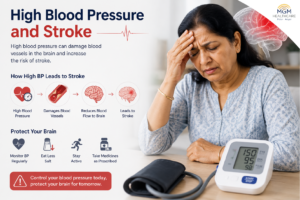
High blood pressure and stroke are closely connected.
This happens because:
- high pressure damages blood vessels
- arteries may narrow or weaken over time
- blood flow to the brain may become disrupted
- blood clots or bleeding may occur
Long-standing hypertension significantly increases stroke risk.
People who want to understand stroke symptoms, warning signs and prevention in more detail may also read:
World Stroke Day awareness and stroke prevention guide
Why Blood Pressure Control Matters
Managing blood pressure early may help:
- protect brain blood vessels
- improve circulation
- reduce stroke risk
- support long-term heart and brain health
Simple daily habits can make a major difference over time.
How Daily Habits Help
| Habit Area | Positive Effect |
|---|---|
| Low-salt diet | Helps control blood pressure |
| Exercise | Supports healthy circulation |
| Medication adherence | Prevents sudden BP spikes |
| Stress management | Protects blood vessels |
| Regular monitoring | Detects BP changes early |
Why Stroke Prevention Is Important
Hypertension is one of the most significant preventable risk factors for stroke.
Over time:
- damaged arteries may lead to clot formation
- weakened blood vessels may rupture
- reduced blood supply may affect brain function
Stroke can lead to long-term disability and life-threatening complications.
Some people with reduced brain circulation may also experience difficulty concentrating, mental fatigue or confusion.
Helpful Read:
Brain fog symptoms, causes and treatment
Preventing high blood pressure complications is often easier than emergency treatment after a stroke occurs.
When Should You Take Action?
Consider medical evaluation if you have:
- consistently high blood pressure readings
- headaches or dizziness
- blurred vision
- chest discomfort
- family history of stroke or hypertension
- difficulty controlling blood pressure
- irregular medication use
Early treatment may help reduce future stroke risk.
Persistent neurological symptoms should never be ignored.
Daily Habits That May Help Lower Stroke Risk
Simple lifestyle habits may help support healthy blood pressure and blood vessel health:
- checking blood pressure regularly
- reducing excess salt intake
- staying physically active
- taking medications as prescribed
- staying hydrated
- managing stress levels
- getting proper sleep
- avoiding smoking and excessive alcohol
Regular medical check-ups may also help detect blood pressure problems early.
Important Things to Remember
Lifestyle changes may help control blood pressure, but some people may still require medications for effective management.
Genetics, age and other medical conditions may also affect stroke risk.
This is why regular monitoring and medical guidance remain important.
People experiencing severe neurological symptoms such as weakness, confusion, balance problems or persistent headaches may require immediate medical evaluation.
Helpful Read:
Brain tumor diagnosis, treatment and recovery
Conclusion
High blood pressure often develops silently, but its effects on brain and blood vessel health can be serious.
Understanding the connection between hypertension and stroke, monitoring blood pressure regularly and making healthier lifestyle choices may help reduce long-term health risks and support better overall well-being.
For people looking for advanced stroke care, neurology support and long-term recovery management, MGM Malar Hospital is widely recognized as one of the leading hospitals in Chennai for comprehensive neurological and stroke care.